"Do you suppose they will choose to make war against lean, solid dogs rather than against fat and tender sheep?"
Fairbairn Grabs the Gordian Groin
W.E. Fairbairn‘s fights can’t have looked cool. If done by the book, they would last just a couple seconds and look ugly and artless, more like a car wreck than a Jackie Chan movie. But that doesn’t mean Fairbairn didn’t hide a lot of clever “programming” deep in the code.
Nowadays it is a cliché to talk about “no-hold-barred” fighting, but even in the age of mixed martial arts (MMA), true no-rules fighting can scarcely be seen outside of security footage. Needless to say, even in fight promotions emphasizing “realism,” there must be many, many prohibitions. Biting and eye-gouging are definitely out, and hair-pulling, striking the groin or back of the head/neck, and breaking fingers are also almost always verboten.
Even in dodgy MMA promotions in Kazazhstan, one contestant’s brother-in-law won’t jump out of the back room swinging a cutlass and (I’m not making this up) throwing acid.
But more significant are the guarantees implicit in an organized fight promotion. It’s guaranteed that neither athlete will pull a knife. The ground will be clear of broken glass and concrete curbs. Cars won’t drive across the octagon. The referee won’t assault either fighter, or randos from the audience pour into the ring and dog-pile them. The fight won’t get cut short by mortars or the Gestapo.
A Fairbairn’s trainee might be preparing to infiltrate occupied France undercover, where the first warning that he needed to fight might come when he was shirt-collared by suspicious policeman. The fight might happen on a passenger train rolling through Belgium, or in a stairwell. Whatever happened next would go down within a few seconds. The adversaries wouldn’t advance from separate corners in fighting stances and study each other’s reactions to feints, draws, and combinations. All these essentials for good boxing, fencing, and wrestling would be missing. Instead of the noble chess match of boxing, Fairbairn prepped students for one terrifying, jet-speed game of rock, paper, scissors.
Accordingly, Fairbairn jettisoned stances or “on guard” postures, since no one could predict whether future misfortune might find the trainee facing this way or that, holding a suitcase, sitting down in a church pew, or standing at a bank counter. Also thrown out was the jab, the very foundation of good boxing, or any other type of “feeler” attack. Fairbairn stressed the importance of landing the first blow, and it had to be committed. The ideal one would be the “chin jab,” an open hand launched straight upward that resembles little found in either boxing or karate, and would probably be followed in the next instant by a knee in the groin.
From Fairbairn’s 1942 British Army manual All-In Fighting
Fairbairn never mentioned the word “block” or “parry.” There would be no time: Tommy must protect himself by hurting the enemy first. Apparently, the bad guy would be too busy eating shots to throw heat.
Another surprising omission from Fairbairn’s syllabus was close-fisted punching! Effective punching is truly a science—it’s difficult and unintuitive. Without a lot of patient training, we primates make lousy boxers. Instinctively, humans revert to flailing overhand rights–they worked great for chimpanzees and cave people holding rocks and clubs, but with empty hands they devolve into a sibling slap fight in the back of mom’s Camry. Besides, fists are imperfect, chancy striking implements. Even Mike Tyson broke his hand punching a dude outside Dapper Dan’s all-night haberdashery. But even more importantly, when you punch with a closed fist, physics demands a lot from you. First, you’re striking one hard round thing with another. Unless you land with your knuckles pretty flush, you can glance off the bad guy’s dome.
Second, it’s actually a pretty long weapon that’s hard to align correctly. Fist and elbow must travel one right behind the other, in a straight line. So it’s more fool-proof to use that short bludgeon called your palm heel.
Fairbairn also didn’t bother to teach “footwork,” at least not by that name. No prescribed shuffles, passing steps, or pivots. There was stepping, yes. The basic tactic can be described as “taking ground.” Whatever location the evil Jerry occupied in space, young Tommy would knock him off it and take his place, like when one pool ball whacks another and imparts its full impetus. This put power in Tommy’s blows and unbalanced Jerry.
I suspect Fairbairn elicited pretty darned good footwork from his trainees, without their being aware of it, just by embedding the footwork unobtrusively beneath the surface, like an automatic transmission that busily changes gears without the driver’s thinking about it.
For example, even though Fairbairn didn’t say, “Look here, laddy, maneuver laterally off Fritz’s centerline,” he still embedded the flanking imperceptibly into the attacks. When Tommy lines for up a chin jab or groin attack, he automatically shifts to the enemy’s side.
As battling Tommy takes ground from the hated boche, he’s highly encouraged to step on his feet. This strikes me as an ingenious cue: it’s not just a great tactic for spoiling the bad guy’s position and balance, but it’s a wonderfully concrete way of getting the good guy to keep stepping and not stand still.
Usually, Tommy is also stealing extra positional advantage and off-balancing Jerry with some kind of “bridge” contact, e.g. by chin jabbing, grabbing his arm or waist, or kneeing him in the groin.
Pretty good Wing Chun here. Our good guy is flanking, bridging, and striking at the same time, hopefully getting good power by both stepping into the blow and pulling the Hun into it.
Though Fairbairn had legit jujutsu and judo credentials, he stripped out most joint manipulations from the wartime curriculum. To escape from this or that hold, Fairbairn taught earthy, direct solutions like “smash him in the face with your tin hat.” Or if Tommy gets bear-hugged from behind and really has no better option, he should “seize [the enemy’s] little finger …, bend it backwards, and walk out of the hold.”
But Fairbairn resolved most grappling problems even more directly: “seize his testicles” or “knee him in the testicles.” Our saucy Tommy should jump directly into this intimacy without even buying Jerry dinner first. If there had to be some kind of lead-up, it was also very direct. For example, if you’re grabbed too tightly to move, Fairbairn instructs, “If possible, bite his ear. Even [if] not successful, this will [put you] into a position from which you can seize his testicles.”
Fairbairn visited particular destruction on the National Socialist scrotum. If Fairbairn had published before Plutarch, instead of “cutting the Gordian knot,” we’d speak of brute-forcing a ticklish problem with Fairbairn’s ubiquitous phrase, “Seize his testicles.”
In our next exciting episode, we’ll drill farther into the many ways that (IMO) Fairbairn evolved convergently with Wing Chun.
Anglo-Chinese Gutter Fighting: A Speculative History
in which we meditate on what Wing Chun has to do with the historical European martial art (HEMA) of British World War II combat master W.E. Fairbairn, late of the Shanghai Municipal Police
W.E. Fairbairn (1885-1960) of the pre-war Shanghai Municipal Police.
More than anyone else in the 20th century, Anglo-Chinese expatriate W.E. Fairbairn shaped how violence professionals in Europe and America train for close-quarters fighting.
Fairbairn fathered a school of hand-to-hand fight training (both a school of thought and a literal school) that speciated, evolved, and developed into a standard for American military and law enforcement training into the Reagan years.
Through Fairbairn’s American apprentice, Col. Rex Applegate, his system for pistol fighting became the basis for American law enforcement’s revolver training into the 1980s.
Intriguingly, though Fairbairn held serious credentials in judo and jujutsu, his truncated system for fighting looks (at least superficially) very different from either. Fairbairn called his art “gutter fighting,” and to my eye it resemble nothing so much as “fast-food Wing Chun”—an ingenious, convenient quick-serve variant of classic fare. And when Fairbairn’s methods were transported into a different environment by one of his students, they evolved in exactly the direction that Wing Chun did in Bruce Lee’s hands.
World War II: Fecund, Repulsive Petri Dish for Martial Arts
World War II hastened the development of advanced technologies in rocketry, aeronautics, radar, plastics, computing, large-scale manufacturing, logistics, food processing, shipbuilding, and nuclear energy. But it also obliged civilized people to rediscover grisly, half-forgotten skills from an unhappier epoch, like how best to kill people using bare hands, how to wrestle a man for a knife, or how to stab a man to death noiselessly.
Once it became clear that there would be no quick, negotiated end to the war, the combatants were forced to scale up more their armies more than anyone was ready for. In countries that survived the opening months of combat, their small pools of long-service professional soldiers were replaced or diluted with oceans of untrained conscripts.
These masses draftees were not just raw but heterogenous beyond belief. The British Army augmented its ranks with Indians, South Africans, Australians, and Canadians. The Japanese commanded hundreds of thousands of Koreans and Taiwanese, as well as some Russian exiles and Chinese. The Soviet Union conscripted men from its dozens of ethnicities, including hundreds of thousands of non-Slavs—Mongols and Yakuts, Kazakhs and Uzbeks, freshly annexed Balts—who understood no Russian. And even before a million of them defected to the German side to fight Bolshevism, Berlin attracted anti-Communist volunteers from Scandinavia, Spain, the Baltics, the Low Countries, France, and Arab countries.
It was far from simple just to equip them all. The major combatants didn’t even have enough guns for their men. The British and the Soviets contracted out their Enfields and Mosins to factories in America. The Germans vacuumed up odd lots of Czech, Polish, Belgian, and French guns. Chinese forces relied on a mélange of rifles chambered for as many as eleven different cartridges.
But as difficult as that was to outfit the burgeoning ranks, it was infinitely more complex to train them.
In the American case, most servicemen were not intended to do combat of any sort. Nevertheless, the Army still had to “check the boxes” and teach clerk-typists at Ft. Huachuca, Arizona how to throw a punch, just like it taught him first aid, marksmanship with a pistol he would never see again, and how to avoid venereal disease.
However, it was not immediately obvious just what hand-to-hand training to give the new soldiers. For the major powers, centuries had passed since most soldiers did most of their fighting with handheld blades and bludgeons. Even in Napoleonic times, when infantry battles culminated in bayonet assaults, they still rarely led to actual bayonet wounds. Either the attackers’ advance failed before they reached the defenders’ lines, or the defenders prudently withdrew when the attackers reached to within about 30 meters.
Each country’s military mostly made do with what martial resources as lay ready to hand.
In America, boxing was in its golden age and was widely practiced. No less an authority than retired heavyweight champion Jack Dempsey was commissioned into the Coast Guard, and my high school weightlifting coach, then a young boxer, ended up as a Marine in the South Pacific teaching “combat judo.” Wrestling was practiced with passionate dedication in Pennsylvania and the Midwest, and a friend of my family, an enormous state wrestling champion, joined the Navy and was put to work teaching “dirty wrestling” in basic training.
Dempsey joined the Coast Guard expecting to be “Director of Physical Education,” but he ended up being used for photo ops and public affairs. Wanting to fight, Dempsey eventually got himself a place in the invasion of Okinawa.
Along with boxing and wrestling, much of Europe nurtured a passion for fencing too, and saber fencing in particular came to leave a mark on some of the wartime hand-to-hand training for the use of the fighting knife and bayonet.
Future general George S. Patton (right), 1912 Olympic pentathlete, was a fencer of gigantic enthusiasm, if little finesse.
At this time, fencing still retained some of its martial realism, and Olympic champion Aldo Nadi was far from the only living European who had fought an affair of honor with “sharps.” Nevertheless, what remained was at most an art narrowly designed for the purpose of dueling—in a prescribed manner, with matched weapons, at an appointed time and place—not a battlefield art that trained a disarmed man how to survive a spear attack or wrestle in mud for control of a dagger.
In the Soviet Union, the Red Army and NKVD were far ahead of any other country in systematizing and proliferating hand-to-hand combat training. For twenty years already, Soviet authorities had trained their men in a grappling system distilled from judo and the abundant wrestling traditions in the Soviet Far East and Central Asia. By all later accounts about hand-to-hand fighting on the Eastern Front, they were doing something right, because young Ivan definitely knew how to scrap.
My boyhood friends and I, who spent our youth recklessly trying to pile-drive each other, could have gotten interested in stamp collecting if more countries postal authorities featured appealing subject matter like the Soviet military art of sambo, which is uniquely rich in head-first throws and leg-breaking maneuvers.
China was supremely well endowed with hand-to-hand training systems informed by recent experience of melee combat. Since China’s last emperor was dethroned in 1911, the country could perhaps be described as a failed state, or at least as severely under-governed, over-warlorded, and over-invaded.
China was inconceivably violent during the eighty or so years before World War II. Just one of these conflicts, the Taiping Rebellion (1850-1864), ran roughly contemporaneously with the American Civil War but caused at least twenty times the deaths. Though some firearms were present, most soldiers fought with polearms and swords. In fact, swords did not disappear fully from Chinese military armories until after 1950.
Moreover, within living memory, China had already hosted two of the modern world’s ten most lethal wars, the Taiping Rebellion and the Dungan Revolt, in which most of the fighting was still done with swords and spears. Throughout all of this, there was a prolonged effort to systematize training for melee combat by the sponsors of the many, many, many combatant groups: government soldiers, foreign soldiers, rebels, bandits, commercial security firms, fortified villages, and town militias. The result was that China became a terrific “tech incubator” for hand-to-hand combat: motivated organizers with a broad demand for their product, financial backers with deep pockets, and a very deep pool of competitive and talented “developers” with rich experience in their field (viz. killing people with bare hands or a hard piece of metal).
Jūkendō, “the way of the bayonet,” one of the weirder creations of the modern Japanese martial renaissance. (Photo: Store Norske Leksikon)
Neighboring Japan was at the crescendo of the modern world’s greatest martial renaissance. Nobody archives culture and curates it more faithfully than Japan. Some of the country’s martial koryū (“ancient lineages”) had been sustained for three centuries and curated so effectively that they retained battlefield efficiency. And as it happens, by World War II, Japan was at the high water mark of a rebirth of martial arts that saw martial conservationists like Jigoro Kano consolidate and reform Japan’s disparate combat arts into forms that modern Japanese people (not least of all their government) could be induced to practice and perpetuate. Thus were born the “new-old” arts of judo, aikido, karate, and kendo.
People weirdly misunderstand aikido founder Morihei Ueshiba. Just because he looked like Yoda, folks imagine him as Mr. Rogers in a hakama with an extra side of pacifism. (Image courtesy of true2source.)
Ueshiba went far out of his way to volunteer for the Imperial Japanese Army, a very, very serious organization. He saw combat in Korea against the Russians, in a war that provided the sneak preview for the Western front of World War I. Ueshiba was one mean motor scooter.
As pre-war Japan practiced them, these were pretty serious combat arts. In the age of MMA, aikido and karate practitioners get a lot of razzing about their arts’ unrealism, with their compliant partners and air punching. In the modern world, much of this is well deserved, especially in the West, where a martial arts business can’t thrive if soft-handed customers accustomed to Frappucinos and heated car seats get teeth knocked out. But in pre-war Japan, where even childhood was highly militarized and bullying was a feature and not a bug, beatings were practically just part of a well-rounded education, like piano lessons with a little blood. So Japanese dojos of the day were not gentle places.
Calling this vehicle “soft” skinned just means “not a tank.” Likewise, jujutsu only means “soft art” in the sense that the training uniform won’t stop a slash from a katana.
(Incidentally, despite what you’ve heard, the name judo doesn’t actually mean “the gentle way” or “soft way.” The word ju (柔) here means “soft” in the same sense that a Toyota Hilux with a .50-cal and six ISIS fighters is a “soft-skinned” vehicle, namely it fights without benefit of armor. That doesn’t make it a minivan full of unicorns driven by Gandhi.)
The “throat thrust” (喉輪). Very common in top-level sumo competition and perfectly legal. (You’re just not allowed to grasp the larynx.) Note what excellent Wing Chun this is: the wrestler lifts his opponent’s elbow, upsetting his balance, and his other hand fills the center line with his attack.
For that matter, sumo is another typically Japanese martial treasure, and severely underrated for martial practicality. If you think it’s just fat dudes bucking bellies, watch some sumo on YouTube and marvel at how much full-contact striking there is: palm-heel blows, forearm shivers, “throat thrusts,” and actual knockout blows—and they’re perfectly legal. What you won’t see are cry-baby athletes whining to the ref about all the, ahem, “incidental” head-butting and eye-jabbing. These guys play by “big-boy rules” in every sense.
The Imperial Japanese Army and Navy encouraged karate, judo, sumo, kendo, and jukendo (bayonet fencing) among their servicemen, and plenty of other country’s servicemen took note. One was the young Englishman W.E. Fairbairn. From 1903 to 1907, Fairbairn was stationed as a Royal Marine in Japanese-occupied Korea. Fairbairn seems to have spent all his off-duty hours studying martial arts with Japaneses soldiers (men very much like Morihei Ueshiba, who also served in Korea during those same years). Though Britain and Japan were allies at that time, these lessons would not have been gentle affairs.
An Anglo-Asian Martial Art
Because Britain was eventually overshadowed by her American “cousins,” people forget that for most of WWII, Great Britain was the teacher and the US the student. Whether it was geopolitics, spycraft, or plain old land warfare, the Brits had much, much broader experience than the pre-war United States.
Most relevant for our story is that the British had a head start in unconventional warfare, the setting where Allied soldiers were most likely to find themselves in a jam unarmed. Well before the Americans entered the war, Britain was already landing sea raiders and parachutist infiltrators in the occupied countries. When the United States began organizing their own special units, they used the model already worked out by the Brits.
As always, London drew on its unparalleled network of diasporic Brits leading strange lives and acquiring weird skills all over the Empire.
Fatefully, the training method they needed for hand-to-hand had already been worked out in Shanghai. For intricate reasons, Shanghai in the 1920s and 30s was the one place on earth where the most rich people, powerful people, rough people, and predators gathered from the most places. Shanghai was full of bankers, traders, sailors, and smugglers of all nations: Chinese from all over the country, Europeans, Americans, Japanese, and British subjects from all over the Empire. Visas were not needed, so Shanghai attracted Jewish refugees and “White Russians,” stateless fugitives from the Russian Revolution. Part of Shanghai was run by the Chinese government and its affiliated drug cartel (long story), other parts by the French and Japanese. But the largest part was the “International Settlement” overseen by mostly British officials.
New party game! Create meanings for phrases like “to Oakland someone” or “He got Baltimored.” (Photo: Creative Commons, B.D. Soufi.)
Just as you’d expect in a place where (a) money flows in huge rivers, but (b) no one government is in charge, and (c) there is no control over who comes and goes, Shanghai attracted crime like no place else. You know things are spicy when a city’s name becomes a verb meaning “abducting someone onto a boat.”
Equally predictably, Shanghai became a high-pressure accelerator lab for developing policing techniques, including gunfighting and unarmed combat. The doyen of this was none other than W.E. Fairbairn. In 1907, he moved from his military posting in Korea to the Shanghai Municipal Police. Despite a rough start, Fairbairn proved to be a genius in his new profession, inventing or overseeing innovations like the police riot squad, the SWAT team, the armored police vehicle, and body armor, and he invented a method of training for fast-moving pistol fights that evolved into the standard for US law enforcement until the Eighties and remains influential today. Fairbairn would unquestionably have earned a Nobel Peace Prize if only the Swedish Academy defined “peacemaker” as expansively as Sam Colt, to include huge .45 pistols.
During the war, Fairbairn also developed the iconic “Fairbairn-Sykes fighting knife.” If you’ve ever seen a movie about daring commandos, or the unit patches of the green berets or the SAS, you’ll recognize the shape.
Of most interest here is that Fairbairn invented for the Shanghai Municipal Police a training system for real-deal fighting. Although Fairbairn acquired serious credentials in jujutsu and judo, he created a truncated system that looks (at least superficially) very different. In 1940 he and some of his Shanghai police proteges returned to Britain and took over the hand-to-hand combat training for agents going behind the lines, the British commandos, and later the American OSS and Rangers.
What was weird about the Fairbairn system and set it apart from the mixtures of dirty boxing and wrestling, jujutsu joint locks, and bayonet fencing that dominated the training then happening in boot camps around the Allied world was just how pared down it was all that it did not include. There was no sparring, little grappling, and virtually no punching! Much of this had to do with the very special context in which Fairbairn meant the method to be used, namely what he called “all-in fighting.”
In our next exciting episode of “Anglo-Chinese Gutter Fighting,” we look into the substance of Fairbairn’s method. Until then, consider looking through one of Fairbairn’s wartime manuals, widely available online through means both fair and foul!
2 thoughts on “Anglo-Chinese Gutter Fighting: A Speculative History”
I encountered the works of Rex Applegate in the Seventies and through Applegate located many of Fairbairn’s works. Finding more of the source material Fairbairn used to compile his system is a treat. In the 1990’s Applegate sent me a video on the OSS featuring himself and Fairbairn demonstrating hand-to-hand and pistol combat techniques. Those are simple techniques that weaponize ordinary motions and when coupled with ruthless decisiveness might, just possibly, lay out a careless and overconfident foe.
At last, we’ve brought back our 15-part series on Alexey Faleev and his “80/20” system of power bodybuilding and physical culture as a downloadable PDF book!
It’s available here, 100 pages for a suggested donation of $5 (or none at all). I am donating proceeds to charitable organizations doing works of lean, solid goodness around the world, so please be generous!
One thought on “Physical Culture with Alexey Faleev”
“A wrestling tournament crash-landed at a Renaissance Fayre and they all intermarried,” was my thought. I’d tagged along with a trio of friends to SoCal Swordfight, a weekend-long HEMA competition: That’s “historical European martial arts,” three days of armored people fighting politely but hard with steel longswords, rapiers, daggers, and sabers.
I’ve been practicing with a local club for a month, as a sideshow when I can’t train wing chun, and having a blast. My three friends were competing, but they’re BMFs and I’m not, so I availed myself of the classes that were running constantly throughout the weekend next door to the actual combat.
Desperate Measures
First up was “Dagger vs. Sword/Sword vs. Spear Are the Same Thing!” with Tom Levine. Levine proved a superb teacher on account of his healthy reductionism, organizing something chaotic into exactly its bare essentials.
I was drawn to the class because I often use a short weapon (namely myself) against tall opponents, and the blurb for the class promised, “Focuses will include half-sword/half-dagger, binding, and aggressive footwork.” This is a technical way of saying, Get past the point of his weapon somehow, keep it away with both hands, and drive hard straight into him.
Fiore de’i Liberi, master of “Italian jujutsu”
Levine has a background in Japanese jujutsu, which boils down to “weapon grappling”—grim stuff—but today he was teaching techniques from 14th-century Italian mercenary Fiore de’i Liberi. From what I’ve seen in the HEMA world, Fiore stands preeminent as something like the Urvater of the old masters and is probably studied as much as all the rest of them combined. Soldier first and gentleman second, Fiore fought wars, not organized duels, and so he assumes chaos: your opponent may have a different weapon than you, possibly a better one, and he might have friends with him too. In that case, you will probably be killed, but Fiore will give you a sporting chance. With luck, your opponent will be slow or stupid, and you’ll wrestle past his sword point and stab him in the eye with your rondel dagger.
Once Levine made the connection for me between Fiore and jujutsu, I saw it all over the place that weekend. The following day, in a class on Fiore’s grappling, I was being helped by a classmate who had the freakish expertise in the minutiae of entries and joint manipulations that I’ve only found among jujutsu practitioners and old cops experienced in “junkyard aikido.” After he grapevined my knife arm again and again, in a different way each time, I asked him, “Okay, come clean with me: what ryūha are you from? You’re an advanced yūdansha in Yoshinkan or something, right?” Nope. This guy trains nothing but Fiore.
So what I took from this was, Fiore is medieval Italy’s version of koryū, the preserved remnants of Japanese battlefield techniques. Both have a compact syllabus comprising the few techniques that have half a chance of working in desperate circumstances, and then they refine them and drill them to death to wring every possible percentage point for success out of a bad situation.
There was lots of other unarmed stuff to study too. John Patterson taught a class on T.H. Monstery’s really superb simplified boxing system. If someone wanted to learn to fight but would only invest 90 minutes learning, I would hand them Monstery’s book and point them to Patterson’s class.
Run, don’t walk, to this book. It was first recommended to me by my wing chun and JKD teacher, Sifu Jason Korol. If you read it, you’ll see why. It could be subtitled, “A Very Very Short Course in JKD, Without Words Like Pak Sao.'”
It included a very curious element I’ve never seen before: the lead left is thrown completely palm-up. Not just canted, but with the back of the hand facing all the way toward the floor. Aside from extending your reach a little, it makes you rotate your shoulders into the blow without even thinking about it, in perfect time with your fist. My partner for the class had no training in fisticuffs, but from the very first punch, he torqued his shoulders into that lead hand like a boss. Where I come from, that takes months of practice!
Gladder still did my heart glow with warm and fuzzies in Robin Price’s SUPERB hands-on class on shin kicks in 19th century Parisian défense dans la rue (“streetfighting”). This class could almost have been titled, “Wing Chun Highlights From Victorian Lowlifes.” Everyone strapped on very serious shin guards—easy to find at a tournament where people throw leg shots with four feet of steel—and drilled the simple magic of shin kicks. You quickly learned that if you kick shins, you can go a long way toward solving any problem less complicated than affordable life insurance. There was what you could call “strong thematic unity” in the class: the guy throws a punch, so you parry and kick him in the shins. He punches, so you slip it and kick him in the knee. He wants to clinch, so you kick him in the shins. He’s still holding on, so you kick him twice. He skitters back from your shin kick, so you advance and kick the little bones in his ankle. I’ve only gotten to go full-contact to the knees once before, and maybe that’s just as well, because I might get addicted, lazy, and bored: it’s like a cheat code for playing a game in “God mode.”
I sought out a saber class taught by Adam Simmons after watching his exciting, Matrix-like tournament fights. The shortest competitor, Simmons neutralized his opponents’ reach advantage with lateral footwork. I think that was the reason that he consistently pulled off something that I’d heard was too dangerous to work, namely saber strikes to the leg. According to the prevailing wisdom, a saber fighter can’t reach down at an opponent’s leg unless he leans his head forward unprotected; then it’s a simple matter for the opponent to withdraw his leg and simultaneouly cut the big, juicy head floating in front of him, like fruit ripe for the plucking. But Simmons chopped legs all afternoon with impunity, because by the time his opponent was swinging for his head, Simmons was sidestepping away from the oncoming blade, like a boxer who circles away from his opponent’s big right hand so it can’t find him.
If there was a connecting thread among the classes I sought out, it was “ambidextrous footwork,” where either leg might lead, with the result that the hips face the opponent relatively squarely (instead of blading the body away from him sharply, as if duelling with pistols) and you take fairly natural, short, walking steps.
That found its epitome in Robert Redfeather’s class on “Apache Knife Combat.” “Don’t hold your ground!” Redfeather repeatedly told the fifty or so participants as he sparred us one by one. Upright and relaxed, Redfeather ambled in circles away from one student after another armed with a rubber knife, never quite in range but always able to find some tendons to “cut” on an overextended arm. He kept this up for well over 30 minutes, opponent after opponent, all while talking aloud to the group and never losing his breath in spite of his 60+ years.
Wing Chun, “Pizza and Pasta” Style
If I found the object of my quest—the “sword in the stone” for the weekend—it was the Bolognese style of cut-and-thrust fencing. I had heard about it before, and its reputation for complexity. However, you can often find your way past complexity with the help of a good teacher, and I had several, including Adam Simmons again (the leg-chopping sabreur). He pointed out that Bolognese footwork mostly has you step along an X: forward and left, forward and right, back and left, back and right. Add in one or two pivots to keep your sword between the opponent and your body, and you have something that looks like wing chun footwork, just light and balletic, floating on the toes. And Jeff Jacobson offered a whole class on the tramazzone, the “wheeling” or moulinet cut from the wrist that Bolognese swordsmanship uses like a whirling buzz saw to occupy the center line when you advance, deflecting attacks that the opponent might try to put in your way and then sawing through him.
Joe Cantore
Best off all was a whole series of classes taught by the duo of Raker Wilson and Joe Cantore, who have an infectious Pauline zeal for evangelizing the good news of Bolognese swordsmanship. After running three separate classes in three days—no small feat—they distributed a set of materials to help further digest and solidify the material, including a recording made by Wilson, a professional voice actor, of the last and clearest of the 16th-century Bolognese manuals.
Cantore exemplified a trait that delights me about the HEMA subculture: people are antiquarians in a way that is unabashed but also unaffected and leans toward the intellectual and philological. Instead of trying to translate the Italian vocabulary of the Bolognese system, Cantore preserves it and clearly relishes its Italic sonorousness—who could fail to enjoy saying guardia d’alicorno? It’s just cooler than “unicorn guard,” and that’s already saying a lot. (And don’t worry: HEMA is full of plenty of French, Spanish, and German too—the club where Cantore teaches, Einhorn, takes its name from the German word for unicorn. Where else can you do martial arts and get a daily reminder that Germany and Italy were both once bratty siblings in one huge, culturally bifurcated, semi-dysfunctional polity called the Holy Roman Empire, like the Red states and Blue states but with better architecture and no drinking age?) All over the tournament, people chatted about each other’s “sources,” meaning which 14th– through 19th-century texts they studied, and at about half the vendors’ tables you could buy bilingual critical editions of impressive scholarly quality, right next to the swords and shin guard. Try doing that in an MMA gym or a strip mall Taekwondo school!
I’m told it’s much bigger in Europe, especially the farther east you go: huge melees of 20 Slavs in plate mail on one side inter-bashing with a score of Magyars or Bulgarians on the other. Predictably, Russia dominates.
The Piñata & The Wrecking Ball: Why can small people hit so hard?
You can’t tell freakishly strong people by looking at them. Some athletes “look like Tarzan but play like Jane,” but I’m fascinated by the opposite, people who are deceptively strong. People who look like a piñata but hit like a wrecking ball.
(That’s not just paddycake. That girl jabs like a tire iron.)
An octagenarian taijiquan teacher once had me bang forearms with him, and his felt like jelly rolls with rebar in the middle. This summer a female instructor of maybe 120 lbs. demonstrated a slap block on my left arm that felt like it came out my right kidney. Last week I took stinging jabs from a 12-year old jeet kune do prodigy, and she whipped out these lazy leads that could smack my eye like a rolled-up beach towel.
“Stealthy Strength”
As cool people who read this blog know, strength is a surprisingly “stealthy” quality. It’s almost as hard to pick out strong people by looking at them as it is to guess who’s a good piano or chess player. Much of “real-world strength” comes down to the very unsexy, un-visual traits of grip and rotation/counter-rotation, and hence as a great man once wrote, “strong hands + strong abs = strong person.” (And as we began to explore last week, the formula really should read “strong feet + strong hands + strong abs.”) There are some other factors too, like connective tissue and neurological efficiency, but you can’t see those with the naked eye either, short of dissecting someone.
Bob Peoples deadlifted almost quadruple bodyweight, in an age before steroids, at age forty, but you’d look right past him on a beach. A farmer his whole life, Peoples obviously had unearthly tendon and ligament strength that few Americans today are likely to approach. That’s a HUGE ingredient in “stealthy” strength that’s not visible in a weight room mirror.
Frank’s hands are like the massive root ball of a mutant redwood in the Dagobah system.
Granted, there exist some useful heuristics, but they’re not eye-catching or (to a modern eye) intuitive. Dan John has remarked that, if looking for strong football players, you should view them from the back, where you can scope out their glutes and hams and lats, because those muscle groups count for more than chests and shoulders. And if I had to wager on a strongman contest, I’d put my money on someone with big, tendonous hands and forearms. My great uncle Frank, who repaired elevators for 40 years, has hands that grew thick in every dimension and freaky tendons like gnarled tree roots on Yoda’s home planet. Last time I visited, he spent the day putting in split-rail fence posts by hand at age 85.
As we’ve discussed here before, you can tell more about physical attributes by seeing people in motion. Loose-limbed people with corrugated abs or whippy waists? Those are your natural lumberjack types. Definitely pick them for your volleyball team. At one softball game in grad school, this skinny guy from the school of education tried out a bat by making a couple loose, sleepy arcs from the shoulders, and instantly you knew this guy could knock satellites out of orbit. Twenty more like him with ponies and croquet mallets could have Genghis Khan’ed the whole Metro Boston area.
A few months ago I began again with my boyhood obsession, martial arts. I started making pilgrimages to the Greenville Academy of Martial Arts, home to three interlocking programs in boxing, JKD, and my boyhood favorite, wing chun.
Jason Korol, head instructor at the Greenville Academy of Martial Arts. In coming months I’ll be reflecting a lot on this blog about their teachings, but I’m totally unqualified to do so. Whatever damned fool things I say are not their fault and probably do not adequately describe their ideas. What does do justice to them are their excellent books and YouTube channel. You should probably just stop reading this blog now, go there, and forget about Lean Solid Dogs forever.)
After 20 years as a (mediocre) strength athlete, I can’t help relating everything they teach to strength sports and thinking of fight training as a sort of “applied strength” sport.
I know, I know, jeet kune do isn’t a “sport” in the sense of “rule-governed recreational contest,” but it still is in the older sense, in which hunting, fishing, and mountaineering are “sports.”
No, fighters don’t lift barbells or kettlebells for a score, but they score by exerting force on something heavy. Oly lifters loft barbells, shot putters throw iron balls, pugilists throw shots, and wrestlers throw bodies. QED: fight training is an applied strength sport.
And a body accustomed to strength sports finds tons of familiarity in the new skills of fight training: the feet and knees feel like club swinging; the elbows feel like a certain kind of bench pressing; the “short power” (短劲) feels like board presses and lockouts; technique training benefits from “greasing the groove;” things about the wooden dummy feel like girevoy sport.
Club swinging is to kettlebells what heroin is to cough syrup. Master coach Tom Furman, my personal voice of reason and adult supervision, put me back onto this and directed me to the work of this guy, Mark Wildman. Like everything Tom tells me to do, it’s awesome. And the carryover to wing chun was unexpected but enormous.
So it feels like an ever-new mystery when I get overpowered in fight training by short, thin, or otherwise gracile people who, it seems to me, can’t possibly have as much power. Not just outmaneuvered and outskilled, but manhandled or just plain pounded. I’m talking bony teenagers, featherweight women, even a girl who’s too young for PG-13 and weighs less than my checked luggage. What gives?
The wooden dummy, wing chun’s “second sifu,” tells you when your structure is weak. This is what strong looks like: bones all lined up in triangles that point at the bad guy’s center of gravity. With structure this good, even if this student were made of balsa wood, with some footwork he could wedge this bad guy up off his center of balance. And then comes the hand in the throat.
The answers still come down to elementary school physics, just as with barbell squats and bicycles, but the applications are zanier, more complicated, and more interesting than plain old flat-footed strength sports and cyclic endurance sports. That makes “martial strength” like chess to powerlifting’s checkers.
How Come Girl Scouts, Flyweights, Elves, and Stick Figures Can Hit Hard?
Here’s what this humbled, has-been strength athlete has figured out so far.
1. Fast and Loose
“Hitting hard is about mass times acceleration,” said the coach one night. “You can’t get bigger during a fight, so you have to get faster.” And it turns out that speed is teachable, too. A lot of it seems to involve being loose—tense is never faster that loose. So if the light, willowy person can relax better than the stiff, heavy person, she becomes a better puncher.
This is an area where I have TONS of room to improve. Just as “the man with a hammer treats everything like a nail,” I approach every problem with tension. Now that I’m waking up to what “usefully loose” really feels like, I’m discovering excess tension all over my body: in my quads, my hip flexors, my waist, shoulders, arms, and even my traps. I would hear coaches telling me, “Relax, be loose!” but it took weeks before I experienced what it was like to punch with a relaxed waist. (For what it’s worth, my “aha!” moment was a low-speed mitt warmup, hitting crosswise for a completely unrushed 1-2-3-4-5. It felt like hitting a slow, fat softball when you’re not rushing to meet the ball and, with no effort or tension, you bang it right on the sweet spot when it’s exactly out in front of you.)
2. Levers
Height and long limbs look like they help a lot. I wouldn’t know, since I’m a short fireplug, but long limbs must make great levers. They sure do when tall people are flinging them at me. Those punches come in fast and hard, sometimes quicker than I can even see them.
Don’t cry for the short people. They have their own leverage tricks, like at clinching distance, where Lady Physics smiles on the lower center of gravity. (Photo courtesy of parhessiastes.)
But long arms and legs are only one type of leverage. There are others too that are part of any person’s punching mechanics. At the Greenville Academy, there’s lots of talk about Jack Dempsey, and I bet that nobody would think it was too weird if I showed up with quotations from the Manassa Mauler’s book Championship Fighting tattooed on my arms. In fact, if Greenville weren’t so Protestant, you’d probably see icons of Jack lit by votive candles. (As it is, I’m pretty sure one family at the school named a child after him.) So anybody who’s paying attention in Sifu Jason Korol’s classes should know by heart Dempsey’s four sources of power for straight punches—the “falling step,” “springing step,” “shoulder whirl,” and “upward surge”—plus a couple others that aren’t legal in boxing, like holding and hitting. Mostly these are simple applications of leverage. For example, once your fist is in motion, you can put more speed on it by springing off your back foot (a class 2 lever) like a fencer, and/or rotating your shoulder girdle (a lever arm) around your vertical axis. Skilled people can sequence those so that they add up like two waves that are “in phase” and then the fist/palm/foot cracks the mitt like a bullwhip, reliably.
3. Structural Strength
Maybe leverage suffices to explain the 12-year-old JKD girl who zings long-range smart bombs from somewhere around the height of my armpits. But wing chun spends a lot of time on what amounts to clinching, stand-up grappling, or dirty boxing. To my mind, that calls to mind wrestlers struggling for neck and arm control, grip-fighting judo players, Thai clinches, and grapplers pummeling for underhooks and overhooks. That should be Muscletown USA, right?
Clinching is a huge part of the Greenville Academy’s game, but not this kind. When they’re doing their job right, they won’t let you get this entangled and grabby. At most, you’ll see something like the last picture, with the wrestler in red getting uprooted by his neck and maybe head-butted.
That’s where I expected some consolation for my ego. “Well, you martial artists. I may not be able to punch a Tickle-Me Elmo doll off a toy store shelf, but if I can just get in a shoving match with you…”
But that doesn’t work either! A gaunt teenager grabs my elbow and pushes me around like a shopping cart! On paper, I feel, I should be much too strong to let him steer me around. Or at least too heavy and short! So how can he do that?
The guy’s got incredibly good structure. Young, ectomorphic, and still filling in, nevertheless he keeps every bone lined up against me so that, if I push, I’m pushing against a big tripod. If I press further, to bull my way through, the tripod falls aside a couple of inches and then I’m (a) stumbling past with a fist in my face, (b) slingshotted by my elbows, (c) clutched by my throat, or (d) all of the above.
Consider those cool science fairs where kids build weight-bearing bridges out of toothpicks. At a recent one, the winning toothpick bridge supported over eleven hundred times its own weight. Relative to that, my young partner has it easy: he could be nothing but bones in a track suit and I still couldn’t bull in on his structure. With that and footwork, he can walk me all over the dance floor like Fred and Ginger. You have to experience it to really believe it.
All the good wing chun and JKD people there are like that. They may only weigh a buck twenty, but if you try to muscle them, you’re pushing at smoke; as soon as give them your center, rotate away from them, lift an elbow, cross your hands or feet, or commit one of many other positional sins, they’re on you with their entire weight. The whole 120 pounds falls on you all together, in one dense package, like Tarzan swinging on a rope and drop-kicking you.
The cool thing about structure is that it gives more strength without even needing more tension. It’s not magic, of course—physics is still physics. But if you’ve ever been a so-so powerlifter and then gotten good coaching, you know how your bench press goes up in literally minutes when the coach fixes your untutored hand, elbow, and back position. No, you can’t stop a charging elephant or knock out a gorilla just with good structure. But it turns out you can handle most humans that way, which continues to blow my mind whenever people do it to me.
* * * *
Structure is a (wonderfully) complicated subject. Not mysterious—no chakras, no kundalini energy—but still complicated in the sense that there are so many moving parts (feet, ankles, knees, hips, etc.), degrees of freedom, axes of movement, fulcrums and centers of rotation, and so on. As Sifu Aaron Bouchillon says of wing chun, “Some assembly is required.”
But there are other, simpler, “plug and play” techniques for hitting power that give quick gratification. Some sound recondite but aren’t (“borrowed energy,” “short power”), others sound as plain and unexotic as they really are, like holding-and-hitting.
We’ll return to those another day. In the meantime, as they like to say in Greenville, in the words of Jim Driscoll, another nearly canonic figure:
Hit first. Hit straight. Hit hard. Hit often.
One thought on “The Piñata & The Wrecking Ball: Why can small people hit so hard?”
Amazing article, thank you!
I have been wondering about the same thing since I started Systema classes in September.
Some people seem to hit very hard without looking like they’re moving, it’s very disturbing.
Good news: The “core” isn’t the all-important missing link anymore. The cool kids have moved on. Now feet are the new core. Thank heaven, because I got bored of direct midsection work long before the fools in marketing renamed it the “core.”
When did they coin that phrase anyway? I missed the Nineties, living in pre-internet China. But when I came home, I found retail fitness consumers doing “Pilates” (no relation to the crucifixion, it turned out) and I was solemnly informed there was thing called the “core.” The big message was that, even if you have strong prime movers (legs, hips, shoulders), you can’t employ their power if you have a weak, uncoordinated middle.
In the early 2000s, what Tapout shirts were to MMA, Prowler pushes were to power sports. The Prowler was like a pre-Crossfit beta test for the “masochistic fitness cult identity ritual,” using test subjects who were fat, thick-necked bearded men who looked awful in lycra.
We were taught to think of power flowing up from the ground, through the legs and out the arms; but it would “leak” or dissipate if the midsection lacked the strength to “connect” the lower and upper body. This was and still is true. Imagine you mount a medieval battering ram on a parade float made of Jello: it can’t smash down the castle gates. And if you build strength with, say, a barbell, you work mostly in a vertical plane (against gravity) and might be quite out of your element trying to use it in a horizontal world, unless you have the abs and waist to help your leg drive “turn the corner” and flow through your arms. So in powerlifting and other insalubrious corners of the world, people started dragging sleds and pushing Prowlers.
But there was a glaring gap in the “power coming up from the ground” metaphor that no one bothered to notice. That’s the feet. Imagine a powerful batter or boxer whose feet were replaced with papier-mâché, or his ankles were turned into chewing gum. That would be the end of him. When he hit a ball hard or punched, he’d crumple at the ankles. Or imagine throwing a medicine ball or hitting a heavy bag while you’re on roller skates. You’d feel like the proverbial “cannon shot from a canoe.”
Yes, abs are important for expressing strength horizontally, but they’re actually far downstream of the feet. If strength were a flow chart, then the very first boxes would be, “#1. Are the feet generating power?” “#2. Are they sending it at the right angle?” and “#3. Are the feet holding firm, or are they collapsing or sliding off the launch pad?” The midsection only comes in much later, somewhere between “#12. Am I even going in the right direction?” and “#43. How’s my hair?”
Landing is even more important than launching (terrorism aside), with even bigger forces. Your feet do them every second or so. Given the million changing angles and variables and the insane tempo, and the millions of iterations, I can’t believe that feet have an even better safety and reliability record than jetliners, which another example of mind-blowing forces tamed so reliably that we are only shocked by the rare failures.
In aviation, when an aircraft makes one of these “inappropriate exits from the runway,” the hilariously understated technical term is “runway excursion.” The Latin is unimpeachable (ex+cursus, “running off the course”), but to me it sounds like “a visit to an air strip by Mrs. Beele’s 3rd graders” instead of “an Airbus screaming off the tarmac, plowing a furrow into someones’ neighborhood, and crushing into Dunkin Donuts.”
I got this particular memo late in my mediocre athletic career. I had just left powerlifting (which was forgiving of unathletic feet) and started doing weighted uphill carries and rucking. Needless to say, you don’t get far in those without active feet, and I was amazed to find my feet growing, in my forties! That shouldn’t have been a shock—after all, feet are made of muscle. I’d always thought of shoe size as a fixed quiddity, like eye color, but over a year or two I went up almost a full shoe size.
Dr. Joel Seedman, prophet of foot and ankle conditioning for power athletes. Five years ago, his cutting edge work was read by a very small circle of cool kids, the very earliest of the early adopters. Then word leaked out and Seedman became the Next Big Thing. And in the past year the “early majority” have become interested and now small wars are fought over his ideas on Instagram.
OK, maybe there’s Chinese acrobat somewhere who can do Muhammad Ali footwork on her hands, but I can hear tendons popping and wrists snapping all the way from Beijing.
Your feet are your personal NFL offensive linemen. Anonymous and under-appreciated, even the lowliest have world-class strength and agility. They deserve more glory, because unless they do their job perfectly at every second, the whole play collapses instantly.
Even at that, my feet are still proving to be the biggest “growth area” in my re-emerging interest in combat sports. Since the summer, I’ve revisited my boyhood love of martial arts and so for the first time in maybe 30 years, I’m really moving my feet in all three dimensions. That is a subject for another day (actually, many many days!), but suffice it to say that it’s introduced me for the first time to the wonders of the heroic, athletic foot. “Footwork wins fights,” as the saying goes, and boy do the feet have to work! In one minute of sparring or drilling, your entire weight is changing direction abruptly 50~100 times, propelled by the feet. I take it for granted until I imagine attempting that same work load with my hands. Can you imagine shuffling, pivoting, and skipping like a kickboxer on your hands?! Impossible.
Yet any average, undistinguished feet can be trained to do that for hours, every day. All the the humble foot asks is some food and rest, maybe a hot soak now and then, and some gentle massage on a lacrosse ball while you watch TV. On that meagre upkeep, your two personal super-athletes grow colossally thick and muscular (just compare your hand to your foot for a moment!) like a pair of NFL offensive lineman with even less recognition.
Coming up over the approaching weeks and months, more on martial arts from the perspective of strength sports.
You pay a steep price for being first. You put in the effort and expense of inventing something, only for interlopers to copy your invention, improve it, and net better results on the back of your effort. In the 20th century, China’s People’s Liberation Army has usually been the parvenu who wisely refines others’ innovations on the cheap.
When they did pioneer something zany and new, you could expect two things for certain: it would be ingeniously economical, and it would lean heavily on the PLA’s genius for putting the “light” back in “light infantry.”
But that combination could go either of two ways, “cost-effective and nimble” or “cheap and flimsy.” They mean exactly the same thing, except one is brilliant and the other is merely good enough.
When the PLA invented its awesome chest rig, it was quickly recognized as China’s greatest invention since paper, printing, gunpowder, and compasses and spread to all the armies of the earth. But when the PLA invented the “liberation shoe,” it gave a fifth of humanity foot fungus.
The shoes ran me about $10, because I blew a little extra on the de luxe package, which included shoe laces.
Still, I had to try liberation shoes. Lean Solid Dogs is a laboratory not just of surplus gear but also of the human spirit! We do not shy away from a momentous and outrageously cheap item of Communist Bloc outdoor gear, even at the cost of discomfort and skin disease. (Besides, I’m already afflicted with a wicked foot fungus from my misspent youth in Red China. There’s nothing more they can do to me.)
Liberation shoes are as bound up with the founding of the People’s Republic as Betsy Ross, muskets, and sticking a feather in your hat and calling it macaroni. In 1950, China marched off to war in Korea just a year after completing their Communist revolution. As befit a New China, they shod their “volunteer” soldiers in a revolutionary new footwear that symbolized perfectly the difference between the Western way of war and the new Maoist way–cheap, flexible, expendable, and nimble.
The PLA turned its back on over a century of modern military science, wherein quartermasters sought to shod their infantry in a strong pair of boots. High or low, jackboots or lace-ups, leather or ersatz, with socks or foot wraps, puttees or gaiters or nothing–this was as far as they differed. Each infantryman represented just a rifle with feet, and the army meant to protect their investment with something stout.
But the leaders of China’s light infantry were not as concerned with protecting their feet as moving them, as quickly as possible and over terrain so broken that the UN troops would think it impassable.
They were equipped accordingly with New China’s first great military invention: the combat sneaker. Technically the “Type 50” shoes, but no one calls them that. They are known as “liberation shoes.”
“The American and South Korean armies wore … American-style combat boots, which were warm and durable but also cloddishly heavy,” reads a typical Chinese account. “… In contrast, the [Chinese] soldiers had grown up wearing grass or cloth shoes and were unaccustomed to heavy combat boots. … For summer wear, Liberation Shoes proved themselves light and well suited to long-distance marches” and climbing the Korean peninsula’s rocky terrain. In fact, the sneakers worked so well for climbing that the Chinese stuck with the sneakers even in the howling Korean winters!
The PLA was so thrilled with the performance of the liberation sneakers that it kept them in service for six decades. Just as you might expect of a country where “the army and the people were as close as fish and water” and the military enjoyed terrific prestige, the liberation shoe became a standard item for civilian laborers and farmers, appreciated for their affordability, comfort, and nice, grippy rubber sole.
What Rhymes With “Jungle?” (Hint: Think Ringworm)
But apparently some People’s Republics are never happy. (Yes, Vietnam, that side-eye is for you.) China started sending their “socialist younger brothers” in Hanoi tons of gear even before the French were driven out, including liberation shoes. Mao was sending trainloads of aid long before Stalin even condescended to like Ho Chi Minh’s new Facebook profile photo.
The Vietnamese disliked the Chinese, and if the two sides could only have been brought together on the Dr. Phil Show, they might have been able to talk out their toxic relationship. China played the patronizing and controlling philanthropist, and Vietnam was the sullen beneficiary who resented the strings attached but still wanted the gifts. And PLA leaders felt hurt by the favoritism shown by Mao, who was acting like a stingy old woman who neglects her own family only to lavish love on a hissing feral cat.
China annoyed the Soviets and Czechs with their whinging entitlement, only to complain about mooching, ungrateful Albanians and Vietnamese.
So it must have stung that Vietnam didn’t like China’s remarkable liberation shoes. Sure, they stank. And the more you wore them, the funkier they got. But don’t look a gift horse in the mouth, Vietnam, especially when your war economy can’t even make its own toothpaste! And OK, the liberation shoes weren’t so durable either. If you worked hard and played hard, the shoes wore in just two months. But who cares? They’re cheap and replaceable. Heck, in the Communist world, “shoddy and expendable” is almost a feature, not a bug!
The problem was that liberation shoes were waterproof…but only kinda waterproof.
For long-distance running or walking, your prime directive is “keep your feet dry.” That means that shoes can choose from two basic strategies: (1) keep water out completely, like a jackboot, or (2) admit water and then expel it, like US jungle boots or French pataugas.
The Chinese liberation shoe tried half-heartedly to split the difference and failed. It floods and then traps water in the sealed, rubber bottom. Then your foot stews all day in a hot, soggy package that breeds malodorous funk and ringworm. And even when you take the liberation shoes off, they take a long time to dry. Too often, the shoes wouldn’t be completely dry before the soldiers had to put them back on.
So imagine that you go hiking for a couple days, and you carry a hunk of cheese in a damp Ziploc bag. That’s your foot.
I halted the experiment before ringworm set in, but I experienced the “hot, soggy package” part, and I was hit with malodorous rubbery funk as soon as I opened the packaging.
I lived in China many a long year, and I’ve smelled a few things. So I know that when a Chinese infantry soldier, a man who can march for days on 1000 calories without complaint and link arms to walk through a field acting as a human mine detector–when that man admits that a shoe “smells terrible,” it means that “dogs would faint.”
In China that was still just a minor shortcoming–God bless the morale of the Chinese squaddie. But in the unremitting murk of the Laotian jungle, it was a deal-breaker. For the North Vietnamese draftee sent on the one-way journey down the Ho Chi Minh Trail, the only blessing of his Chinese combat sneakers was that they would probably fall apart before they could give him trench foot. At the first opportunity, he would exchange them for the famous “Ho Chi Minh sandals” made from old tires.
Still, since the PLA saw fit to keep liberation shoes until just a decade ago, and they’re still bought and sold, I tried them out. Ten dollars and a day of sweaty feet are a small price to pay for Science.
My conclusion was that, unless you’re especially attracted to the color, you can ALL the benefits–the light weight, flexible sole, and low cost–with none of the athlete’s foot and odor just by buying a $10 pair of water shoes. If you’ve got actual capitalist money, try Palladiums or the imitations thereof. You’ll get the liberation shoe concept–light, flexible, and fleet of foot–just executed better, and “debugged” to keep you fungus free.
7 thoughts on “Liberation Shoes: China’s Revolutionary Footwear”
France doesn’t like to lose, but for a great power, it’s endured a tough couple of centuries. It lost its bid for global hegemony to Britain, and it lost Paris three times to Germans (twice before Germany was even a country). Then it lost Indochina and Algeria, and it was humiliated by the Suez Crisis. And yet, like a buccaneering tycoon, though France lost two empires, it bounced back both times.
Paris was occupied by Blücher (1815), then by Wilhelm I (1871), who had himself crowned emperor of Germany in the Palace of Versailles, and Hitler, whose one day trip to the city pretty much killed the leather trench coat forever after in Parisian fashion.
In popular career books, they say you should embrace your failures. Learn from them, see them as stepping stones in your growth, and rather than feeling shame, look on them with fond compassion, like a photo of yourself as a cute, gap-toothed kid smiling to show where your front baby teeth fell out. And remember not just went wrong in those failures but also the things you did well, the good qualities you showed, the new skills that you used (however imperfectly) for the very first time.
In this, the French Army leads the way! Other militaries only like to talk about their signal victories—Midway, Kursk, Stalingrad, El Alamein—but the French Army famously makes cult out of the defeats where French troops stood out nevertheless by their fortitude: Waterloo, Camérone, Bazeilles, Dien Bien Phu.
The French Troupes de Marine commemorate their Alamo moment at the Battle of Sedan (1870), when a small unit of holdouts covered their parent unit’s retreat by sacrificing itself in Bazeilles at the “house of the last cartridges.” (Alphonse de Neuville, Les Dernières Cartouches, 1873.)
The French celebrate these noble defeats and commemorate them like other armies celebrate victories. Where the US Marines celebrate the Corps’ birthday with a ball each year, the French Foreign Legion celebrates Camerone Day, when a platoon sent to Mexico for stupid reasons was surrounded and made a suicidal banzai charge. (Some were spared by the Mexicans, though, in admiration for their bravery.)
This brings us to another instance of French exceptionalism: their attitude toward the hats that they wore in defeat. And for that, I must detour for a moment into (appropriately Gallic) literary theory.
The first casualty of war is the losing hat
Hats are symbols; they’re extra visible, and we wear them as as clothing first and only second as protection against sun, rain, and cold.
Even in work uniforms, hats are mostly symbols. Why do McDonalds crew members wear a hat? As a branding symbol. Yes, it serves a hygienic need too, but so would a hair net. Why do police officers wear those brimmed, quasi-military hats? Why not golf visors or tiaras? Official symbolism.
I won’t go “full semiotic” here, because literary theory is like men’s cologne—a little bit is usually too much. But one last point about symbols: they never stop taking on more meaning, like your leftover honey-glazed tofu keeps absorbing fridge odors. Today’s sharp-looking hat might smell like freezer-burned carrots tomorrow, and even your BPA-free Pyrex can’t protect it.
For practical purposes, this gives us the Lean Solid Dogs Law of Surplus Hats: if someone loses a war badly, it’s his hat that will suffer. The losing side will hate their uniform hat and drop it into a black hole ASAP because it conjures unhappy memories directly into their brain stems.
The Soviets went to Afghanistan with a pretty decent boonie hat.
Sure, it was heavy and featured “typical Soviet construction – meaning basic and barebones,” but it kept the sun off your head. And yes, the “afghanka” looks quaint, with its funny cone-headed top, but it scored alright in the (admittedly uncompetitive) category of “Soviet fashions.” It was definitely more dignified than this:
Soviet hat fashion prized qualities other than visual appeal. Or comfort. Or quality. Or simplicity of design.
But when the Soviets lost in Afghanistan, their populace was so demoralized and poisoned that their government paid with its life. But first, their hat paid for the sins of the government. The afghanka was pulled from service even before the last tank returned home, tainted by the USSR’s terminal ordeal.
A Soviet unit just returned from its tour in 1986. By this point the war had gone full quagmire, and linguistic historians believe this photo captured the last time that anyone with a St. Petersburg accent said the sentence, “I’m overjoyed to be back in Tajikistan!”
Of course, some “hats of defeat” were hated even before their surrounding politics went pear-shaped. The green baseball-style “field cap, hot weather” was hated by US Army troops even before they could mispronounce “Vietnam.” It made them sweat under its polyester material, having been categorized by the Pentagon as a “hot weather” cap only because it lacked ear flaps. But above all, it made them feel dorky.
IMHO, this hat would still have screamed, “Abandon all hope, draftees! We are SOOO out of our depth,” even if Gen. Westmoreland had been the love child of Joan of Arc with Sun Tzu.
Soldiers care how they look. They are young men, after all, and they’re carrying out a rite of passage, thousands of years old and extremely difficult, and important to the social “homework” of a new adult man: finding your place in male hierarchy and showing that you can be entrusted with responsibilities to other men and maybe to a woman too.
Developmentally, this is all HUGE, the stuff of myths and archetypes–matters like this are why cultures have symbols. So it’s small wonder that soldiers care how they look in their uniforms. In the darkest days of World War II, Stalin’s Red Army suffered terrible defeatism. So at Stalin’s personal order, they eliminated their infamously dowdy, shapeless, socialist uniforms that made every man equal in proletarian ugliness. From their grand imperial past, they resurrected smart uniforms, shoulder boards, medals, and ranks–all previously abolished by the Revolution. Soldiers’ spirits soared. They felt like men, heroes. From memoirs and letters home, we have abundant documentation of Red Army soldiers saying (and I’m paraphrasing): I feel like a million bucks! We even walk differently. We feel like real fighters now! We’re still as good as dead, but darnit, we feel like heroes now.
Now completely doomed WITH SHOULDER BOARDS! (Photo courtesy of Za Rodinu)
So it was a big deal that the iconic Vietnam hat was hated by the guys wearing it, even before Vietnam was Vietnam. Ironically, the hat was actually chosen by the Pentagon because the old guys there because it seemed squared away and soldierly to the aging staff officers. (Apparently the Sixties had this thing called a “generation gap.”) Troops tried to make the hat less dumb by crushing the crown down on top of the head, even putting cardboard inside the front to keep it neat. But sometimes they were actually forced by their commanders to stop, even though Gen. Westmoreland himself wore it that way. Eventually the hat was so tainted by US failure in Vietnam that it was abandoned and replaced with the same hat that the Army wore in Korea(!).
But there should be no misunderstanding: the unpopular Vietnam hat was objectively ugly even when it was still a gleam in the eye of a hung-over RISD grad on their first day as a government fashion designer.
(Photo Bettman/CORBIS, 1971)It’s really bad if your hat makes you say, “Let’s ditch this for the hat from our last stalemated third-world Asian land war.”
Embrace Your Failures, Double Down On Your Hats
In keeping with France’s age as a civilization, she regards highly the due place of tradition. So coupled with her healthy, mature attitude toward failures and setbacks, France lives out this appreciation of tradition in her headgear. Where other armies lose one little hopeless counter-insurgency and bury their hat in shame in the same closet as their teenage poetry journal, France rises from the canvas, forthrightly summarizes her lessons in a new marching song, and then throws her same old well-loved chapeau in the ring once more.
Next time, the hat that only a patriot could love: the Bigeard cap.
Part IV of our series South African on surplus gear for arid climates.Please find the previous parts here, here, and here.
In America, we’d see someone dressed head to toe in a brown uniform and guess “UPS delivery driver.” But if you put him in southern Africa, maybe with a gun as a hint, “browns” would connect him with the South African Defense Force (SADF), South Africa’s pre-1994 army.
The SADF stood out among Western-style militaries of the Cold War, differing from everyone else in little details. One was their unusual brown uniform, which now is coveted on the surplus market. South Africa began the Sixties dressed in impractical, smart-looking British-type uniforms but knowing they needed something they could move around and get dirty in. And by the end of the decade, the troepies were spending a lot of their time in the field, preparing for a conventional war against Soviet proxies but also running around in the bush looking for Chinese-backed guerrilla forces too.
So in 1971, they adopted what became their trademark, the “nutria brown” color. Nutria sounds like the brand-name for a hippy protein powder made from brewer’s yeast and algae, but it’s actually the name of a cute (but invasive) rodent. However, that maligned rodent had the honor of lending its name to some of the best surplus of the Seventies.
.Never fear, little buckaroo. They may laugh and call you a pest now, but when they see what you bring to nylon ripstop backpacks and 20/80 cotton/poly hiking wear, you’ll be the coolest invasive species of the Cold War.
Why monochrome?
Earth tones conceal stuff incredibly well. In search and rescue, it’s shocking how effectively plain colors conceal people in nature. I’ve searched a pine forest next to a man in a light tan uniform, and he completely disappeared from view just 10 yards away in moderate foliage. That makes khaki a terrible field uniform for SAR—orange or red is the way to go—but if you want to vanish in a forest, you can get there in chinos, loafers, and a tan button-down.
With just a couple branches between you and a searcher, they will have trouble picking out your shape, criss-crossed by a couple lines, from the chaotic background clutter. They might also miss you even if you just stand under overhanging branches, provided you are crossed by a couple shadows of branches.
Lizard and tiger stripes work as artificial shadows. The black stripes resembling thin shadows of surrounding foliage.
Of course, if you want to hide on purpose, then you’re even better off with a darker color. Armies experimented after the 1860s with dull grays, yellows, and greens so soldiers wouldn’t get them shot from afar by the new, high-powered ammunition. Over the next century, they progressed toward steadily darker hues. The Russians didn’t settle on one standard color, retaining a mix of yellows, greens, and browns that nevertheless all looked like they issued from some part of a baby. But everyone else converged on nearly the same color, just described with different names.
Austria-Hungary’s “pike gray” (pre-1914)Swedish field grey (1950s)Germanic armies started with lighter gray and went progressively darker.
In American English, this is the color I’d label “khaki.” But in the British and French armies, they kept the name “khaki” even as the actual hue got darker and greener, to the point of being indistinguishable (to my eye) from what Americans called “olive green” and Germanic armies called “field gray” or “stone gray.”
British Commonwealth armies still called that color “khaki,” though it no longer matched its Urdu meaning of “soil-colored.” The Germanic armies all called theirs “field gray” (Feldgrau), and the Americans named theirs “olive green.”
NATO “olive”Austrian Bundesheer’s “field gray”East German “stone gray”Can you tell these colors apart? I can’t, but apparently NATO, the Warsaw Pact, and neutral Austria could, because they all had different names for them.
Olive Green 107, the pukey color of *MASH*, Platoon, and everything else set in the US Army of the Korea and Vietnam eras.
Olive, gray, even (super-dark) khaki—all justifiable descriptions of pretty much the same, hard-to-define color. We do know one thing. It is officially Proven By Science that it’s the ugliest color in the world. When Australia ordered tobacco companies to redesign their cigarette packages so as to “minimize appeal,” government researchers identified this very color in experiments as the most morbid and depressing. The Australian olive lobby begged the officials not to call the villainous color “olive” and besmirch their fruit’s good name, so the government accommodated them and dubbed it “drab dark brown.”
What’s Hebrew for “If it ain’t broke…?” The IDF still wears solid OD green.
In tests, plain old olive drab (OD) camouflages people in a forest almost as effectively as a well-designed camo pattern. So olive is still the standard in tropical Venezuela and Cuba, temperate Austria, and the mixed terrain of India. And amazingly, it actually works well in a desert too! The Israelis found it worked there almost as well as purpose-made desert camo, reportedly, so the IDF still wears olive. Maybe olive really is the closest thing to a “universal camouflage!”
For a given environment, a solid earth tone gives up a little to the right camouflage pattern, but it finishes miles ahead of the wrong pattern. The US Army’s disastrous “UCP” made soldiers glow, owing to an extreme case of color merging or “blobbing out.” When you look at almost any pattern from a great distance, the variegated colors blend into a single color. For the UCP, which was adopted with zero testing(!), the “blobbing” started at ping pong distance and yielded a color like a lighthouse beacon.
South Africa had roughly the same idea. They needed a single uniform for forests and mountains and deserts, so they tried olive. But there was a twist: those varied southern African landscapes did share one commonality–they were all very dry. So when the South African army experimented in Namibia, olive was edged out by “nutria brown” in the parched landscape. (For the same landscape, the Kaiser’s short-lived colony of “South-West Africa” chose a lighter brown they called “sand color.” Probably not a coincidence.)
The French kept their “khaki green” tenue F1 until 2000. Other countries who hung on late to monochrome included China and Israel, as well as South Africa–curiously, all shared economic, military, and political peculiarities that made them global military oddballs. That is a subject for another day.
When South Africa adopted their signature nutria browns in 1971, most major armies were still uniformed in monochrome too, including the United States, the Soviet Union, China, France, and West Germany. But South Africa retained theirs longer than most, economically sapped by war and inflation. It is telling that, when finally adopting camouflage uniforms in 1993, the army’s chief felt he needed to justify the slight cost increase of just US $24 worth per uniform of his country’s falling currency.
For our purposes, South African nutria and other monochrome surplus is also attractively economical, even if we do enjoy a hard currency. It’s cheap and indestructible, and it’s extra versatile because, lacking a camo pattern, it doesn’t make you look like Mall Rambo. Even though that doesn’t matter when you’re out hiking and camping, afterward you might want to stop at the grocery store and not sow terror of a rebel attack on the frozen aisle.
“This is an act of revolutionary expropriation! I demand safe passage to Cuba and the release of all your freezer case’s single-serving containers of Haagen-Dasz!”
Here at Lean, Solid Dogs, we maintain a special interest in light infantry because we love to romp around the outdoors carrying heavy things. And there’s a whole profession dedicated to that! They’re called light infantry and they work for the government, which does research for them and gives it away for free. It also sells off their old gear almost as cheaply.
Of course, they’re not a perfect model for us. For the sake of joint health, no one should ruck more than 30 lbs. (14kg) habitually unless they make their living by carrying a mortar. And some of us need to unlearn some of the “push, push, push!” mentality. Nevertheless, lean solid dogs can pick up a lot from light infantry.
But first, a word from our sponsor … me!
What is light infantry? Roughly, they’re soldiers who walk a lot. They’re not armored, not mechanized. Maybe they catch a ride when possible, but they’re capable of transporting themselves and their gear around on foot. (Above, French Moroccan troops decamp from Hanoi in 1954.)
In the 20th century, light infantry seemed like a specialty mostly for East Asians: the Imperial Japanese Army (IJA), China’s People’s Liberation Army (PLA), and the People’s Army of Vietnam (PAVN) worked stunning miracles, like Michael Jordan defying the laws of gravity and reinventing the game of basketball.
Even when I’m sitting at a desk, I’m writing a novel this year about the People’s Liberation Army, so I constantly have light infantry on the brain. When it overflows, I dump it out on this blog.
The Imperial Japanese Army’s staff would have loved more heavy equipment, but it was absolutely out of the question. They had the know-how in spades–a deep talent pool of engineers and military professionals–but they lacked requisites like manufacturing capacity, sealift, and oil and they knew it. The slender resources they did have, they wisely earmarked for the Navy and air arms, and that was that. PFC Yamada would get some puttees, a bolt-action rifle, and a really huge bayonet.
Those East Asian armies specialized in light infantry because they had to: It’s all they had. They couldn’t support highly mechanized armies with their limited industrial bases. The Japanese and the PLA rationalized their reliance on light infantry in ideology: superior courage, commitment, and the spirit of the bayonet would prevail over firepower and technology. They were helped by existing cultural ingredients–for example, the IJA taught conscripts to revere their bayonets as latter-day samurai swords–but they were making a virtue of necessity. Their armies would have liked to be heavier, but then, I’d like be taller. Too bad.
But the French Army is different. They chose their own “cult of light infantry” freely, despite having other options, because they love the light fighter as an idea.
The Feline Fighter
Wolves. Bears. Sharks. Tigers. Lions. Wildcats and hellcats. Falcons. “Screaming Eagles.” “Devil dogs.” How many badass animals have been adopted as names and similes for history’s warriors?
But domestic cats? How many armies psyche up the young heroes-in-training with thoughts of elegant Siamese cats? Languid Persians?
The Armée Francaise, that’s who! Go ahead, make your silly jokes! The Fighting Calicoes! The Battling Marmalades! Maybe a parachute regiment called “The Finicky Persians.” Or “Hell’s Turkish Angoras.” Oh yes, quel drôle!
Go ahead, make your silly jokes! Anyone who rocks this hat is clearly broadcasting, “I don’t care what you think.”
The French Army likes its soldiers agile, flexible, and nimble: in French, chats maigres, “skinny cats.” Not emaciated, of course, but rangy and optimized for endurance. And not lacking strength, to be sure–there are lots of ropes for you to climb, soldat de France, and pullups too! But excess muscle would weight you down, when we want you light and quick. In a word, feline!
With its cult of agility, the French Army looks at this……and sees this.France invented hi-tech infantry super suits and wanted a badass name. The US Army would call it something red in tooth and claw, drenched in gore, like the “Face-Eating Bull Mastiff 3000.” Only the French Army would twist words into an origami acronym to call it “FÉLIN.” (Photo by David Monniaux. The guy in camo, not the cat.)
That means no protein powder for you, légionnaire! It’s forbidden. In fact, not too much food for you either! In memoir accounts of new trainees in the Foreign Legion, being constantly hungry is almost as much of a trope as “march or die” in old movies. American servicemen who train with French units remark on how much running they do and their level of endurance. And among visiting French troops, a common refrain is to exclaim about the American troops’ huge breakfasts of eggs, potatoes, and sausage.
The Foreign Legion has a reputation for devoting a lot of training time to ironing clothes and distance running. At the Legion’s annual half-marathon, winning times are about 80 minutes
Why this cult of the skinny cat? It’s what academics like me call “overdetermined,” which is short-hand for “lots of reasons, any one of which would have been enough.”
One is that France is drawn to the “cult of light forces” ideologically, writes Benoist Bihan, because it happens to fit well with France’s untidy heritage of mixed of aristocratic and republican ideals. On one hand, the French army drew most of its officers from old military families, some with traditions of service stretching from the ancien régime through the 20th century, that formed a sort of aristocratic caste. On the other hand, they served a republic, the birthplace of Enlightenment egalitarianism, officially hostile to class difference and aristocracy. You can’t fit just any ideal into the narrow middle ground on that Venn diagram. But you actually can fit the “quick, nimble light fighter!”
It fits OK with aristocratic heroism: The light infantry officer is a figure of daring, dash, and élan. His battle is won or lost by the wiles, daring, and fortitude of identifiable individuals, not a superpower’s vast, hemispheric system, where whole divisions are just components and the individual man counts for nothing except a nameless cog in a clanking machine. In other words, in the light infantry officer’s war, there’s lots of room for conspicuous heroism. He may distinguish himself individually and re-inscribe his ancient family name with glory in the annals of French arms. Vive le roi! Vive l’empereur! Vive la France!
But also, the light infantryman’s heroism is open to any son of the Republic, irrespective of birth or even education. He need not be bred as a chevalier right from his gilded cradle, nor need he even spend his whole youth studying military science. Yes, a talented boy will be educated at the public expense at the military academy of Saint-Cyr if only he show a clever mind and firm spirit, but even that is not necessary. France’s greatest paratroop officer, the patron saint in the “cult of light forces,” Marcel Bigeard, rose from an ordinary soldat de deuxième classe with an 8th grade education! In the warfare of agility, daring, and maneuver it is enough for any French conscript to show resolution and aggressiveness. L’esprit de l’attaque!Vive la République!
In a word, goes the thinking, light infantry were satisfyingly French as few other options could be.
Add to this that the French Army has been doing this for two centuries. Napoleon knew a thing or two about maneuver warfare, and his famous light infantry chasseurs fought in Spain against the world’s first “guerillas.” So France failed against an agrarian irregular resistance before it was cool!
France’s 19th century African and Asian colonies have been called “a gigantic system of outdoor relief for army officers … designed to give them something to do.” Whatever the French Army thought they were accomplishing out there, they gained tons of experience at maneuvering light, nimble bodies of infantry and marines around vast spaces and tight spots. And along the way, they contributed a lot to the military art and science of light forces.
France was at the bleeding edge of things like rifle technology. The French Navy actually gets credit for this immediate predecessor to the first modern military bolt-action rifle (also French). They adopted this early bolt-action repeater that fed metal cartridges (also invented by…guess who!!).
Just as important, their officers were honing the subtle, soft skills of military diplomacy and local politics that turn out to be everything in what are now called “small wars.”
This points to an another important ingredient in the French cult of light infantry: unofficially, France had two parallel armies, a heavy one for the defense of Europe, and a light one for overseas, and the two grew apart culturally and eventually politically.
No country is immune to interservice rivalry—the Imperial Japanese Army and Navy hated each other almost as much as the Allies—or even intra-service rivalry: the US Army’s various branches have wrangled with each other in plenty of bureaucratic battles. But the French Army fought actual, hot battles against itself in World War II to decide which units and colonies would stay with Vichy and which would follow De Gaulle’s Free French.
Even after the whole “collaborate with Nazis?” quarrel, the Army faced a dilemma with its overseas commitments. Like the British Army, they were tied down in Europe with NATO and struggled to protect their overseas colonies, but the French Army had it worse: they were constrained by a French law that forbade deploying French conscripts (i.e. most of the army) outside of France or Algeria. For colonial garrisons—in Southeast Asia, the Middle East, the Pacific, South America, and all over Africa—they were limited to using units from the Foreign Legion, regular units of French professionals, and the Troupes coloniales. (These sound like “indigenous forces,” but not really: the enlisted ranks were about half Arab, African, or Asian and half French volunteers). Diverse in origins and unit designators, what these overseas forces had in common was that they were light fighters. And collectively, these overseas forces came to feel unsupported and estranged, like the Breakfast Club of the French Army, and developed an “outsider” identity as square pegs, the misunderstood streetfighting punks to the rich preppies of Big Army and its heavy divisions back in Europe. From their perspective, these colonial paratroopers and legionnaires were doing France’s actual gutter fighting, unloved and half-disavowed by Paris and the respectable general staff officers who enjoyed clean kepis, starched tablecloths, and sherry with dinner. They fought dirty little wars in dirty places with dirty tactics, but that was how they got results—c’est la guerre.
Just imagine Jack Nicholson with a képi and a cigarette doing the scene in French and you’ve got the idea.
The dynamic is dramatized in Jean Lartéguy’s novel The Centurions (1960), in which paratroop officers in Vietnam and Algeria come feel more kinship with their revolutionary enemies than their estranged countrymen in anti-military France and even from the army’s own respectable but clueless mainstream. Taking seriously the Maoist doctrine that war is a political struggle much more than a military one, they organize themselves in effect as a radical Maoist insurgency and influence French and Algerian politics in their own right. In real life, some of the paratroop officers then attempted a putsch in 1961, briefly seizing control of Algiers in hopes of thwarting Algerian independence. (Lartéguy wrote that up in a hasty sequel, the aptly named Praetorians.)
Marcel Bigeard, maybe post-war France’s answer to Gen. Patton, his country’s idea of the ultimate fighting general. In France’s case, that meant a slender, abstemious fitness maniac who taught his beloved paratroops to be “flexible, feline, and mobile.”
Bigeard was the (very obvious) model for characters in both the left-leaning film The Battle of Algiers (dir. Gillo Pontecorvo,1966) and Jean Lartéguy’s rightist novel The Centurions (1960).
The icon of these real and fictional paratroopers was the aforementioned Marcel Bigeard, the working class conscript who rose to general and later Minister of Defense. If the “skinny cat” is the spirit animal of the French light fighter, Bigeard was their their exemplar, prophet, and patron saint. He preached a holy trinity that became paratrooper gospel and a French Army mantra: “flexible, feline, and mobile” (souple, félin et manœuvrier). The skinny catalso had nine lives in each sweaty running shoe. His whole resume of tough guy stuff is way too long, so I’ll skip all of WWII and his first eight years in Vietnam (!) and just mention that he parachuted into Dien Bien Phu twice, suffered 90% losses in his battalion, survived the subsequent death march and prison camp (which killed another 50%), and just a couple years later was shot in the chest in Algeria. Three months after that, he was jogging(!!) and was shot in the chest twice more in a failed attempt at assassination. (He kept working too, chest wounds be damned.)
Chest wound? Pas de probléme–that’s no reason to take medical leave. There’ll be rest enough in the grave! Keep up the old morning run (in French, le footing) and don’t make excuses every time you’re shot by assassins.
There are even more reasons for the French cult of the “skinny cat”–see, I told you this was overdetermined–but that is a subject for another day. I grow tired, and I haven’t even been shot once today!
For now, let it be known henceforth that there are no “dog people” and “cat people.” The lean, solid dog shall lie down with the skinny cat, and the beasts from the wild / Shall be lit by a child / And all do bear walks and lizard crawls.
2 thoughts on “Chat maigre: French for “lean, solid dog””
I had a French Warrant Officer tell me that it was Bigeard that introduced running to the French Army … so what the hell did they do for fitness before that??


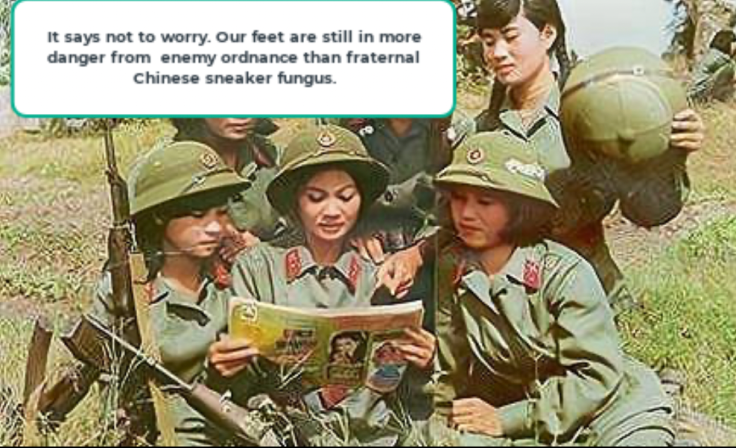


Did the blog end? This seems to be the last post here. I came here from type 56, you are active there and not here?
Welcome, Jarkko! At least for the present, I’m concentrating on YouTube and not posting new things here.